What Is AI in Healthcare?
AI in healthcare refers to the use of machine learning, large language models, computer vision, and predictive algorithms to support — or in some cases automate — tasks that doctors, nurses, and administrators do every day. It spans everything from reading an X-ray to drafting a clinical note to flagging a patient at risk of deterioration overnight.
AI in Healthcare Examples (Real-World, Right Now)
These aren’t hypothetical. They’re happening today across hospitals and clinics.
1. Predicting patient deterioration early In one hospital-based study, an AI model trained on continuous wearable vital signs predicted patient deterioration up to 8 to 24 hours before standard hospital alerts — identifying patients at risk for ICU transfer, cardiac arrest, or death while there was still time to intervene.
2. Rare disease diagnosis A Harvard Medical School research team introduced PopEVE, an AI system published in Nature Genetics that evaluates whether a genetic variant is benign or disease-causing. Applied to roughly 30,000 patients with severe developmental disorders, PopEVE surfaced probable diagnoses for about one-third of them.
3. Cancer screening Studies show AI can assist in cancer detection in colonoscopies and mammograms — reducing missed findings that even experienced clinicians can overlook.
4. Clinical documentation (ambient AI) Ambient AI helped a large California-based health system save nearly 16,000 hours in documentation time over a 15-month period.
5. Insurance claim appeals With more than 450 million claims denied annually in the US, AI systems are now drafting evidence-supported appeal letters by reviewing patient records and denial rationales, helping recover significant revenue for providers.
AI in Healthcare Industry: Where the Money and Effort Is Going
The healthcare AI industry is growing fast, and investment is accelerating across every segment — pharma, hospitals, insurers, and medtech.
The top three AI spending priorities for healthcare organizations are: identifying additional AI use cases (47%), optimizing workflow and production cycles (34%), and hiring more AI experts (26%). More than a third of organizations plan to increase AI investment by over 10% this year.
Rather than AI tools that handle only individual tasks like note-taking or scheduling, intelligent agents will increasingly automate entire patient episodes of care — from intake through treatment plan — working across departments and improving as they go.
By industry segment, priorities differ:
- Hospitals and insurers: Administrative workflow automation (scheduling, billing, claims)
- Medtech: Medical imaging and diagnostics
- Pharma and biotech: Drug discovery and clinical trial design
- Digital health: Clinical decision support and patient-facing chatbots
AI in Healthcare: Stanford Research and Findings
Stanford is one of the most active institutions in clinical AI research globally. Here’s what their latest work actually shows — not just the hype.
A 2026 State of Clinical AI report — led by researchers from Stanford and Harvard — reviewed the most influential clinical AI studies of 2025 to ask a practical question: where does AI meaningfully improve care once it leaves controlled research settings, and where does performance break down?
Key findings:
- Several studies showed large language models matching or outperforming physicians on diagnostic reasoning when evaluated on fixed clinical cases. But when models had to ask follow-up questions, manage incomplete information, or revise decisions as new details emerged, performance fell significantly.
- On tests designed to measure reasoning under uncertainty, AI systems performed closer to medical students than to experienced physicians, and tended to commit strongly to an answer even when ambiguity was high.
- Stanford researchers developed MedAgentBench — a benchmark published in NEJM AI — to evaluate whether AI agents can perform actual clinical tasks inside electronic health records, such as retrieving patient data, ordering tests, and prescribing medications. “Chatbots say things. AI agents can do things,” said Jonathan Chen, senior author and associate professor of medicine at Stanford.
Stanford’s AI for Health program focuses on developing unbiased, explainable AI algorithms to improve the efficiency, value, and delivery of healthcare — and to improve patient experience and outcomes.
AI in Healthcare: Harvard Research and Contributions
Isaac Kohane, chair of Harvard Medical School’s Department of Biomedical Informatics and editor-in-chief of NEJM’s AI initiative, describes the abilities of the latest models as “mind boggling.” He is most excited that AI will transform the patient experience — including having an instant second opinion after any clinical interaction.
Harvard researchers have been central to some of the most cited AI breakthroughs in medicine:
- PopEVE (Nature Genetics): Harvard Medical School and the Centre for Genomic Regulation introduced this AI system that evaluates whether genetic variants are disease-causing. It also addresses an equity concern — its design avoids penalizing genetic variants more common in non-European populations, making diagnoses more accurate across diverse ancestry groups.
- Biological age from records: Harvard-linked researchers used AI to estimate “biological age” from routine health records across millions of individuals. The AI-derived age measure predicted mortality more accurately than commonly used aging markers, including epigenetic clocks and frailty scores.
- Harvard’s Leo Celi has cautioned that AI’s promises will fall short “unless we recode the world itself” — pointing to the design flaws in legacy healthcare delivery systems that need to be fixed before AI can truly work within them.
AI in Healthcare Research Paper Landscape: What Studies Say
A review of more than 500 medical AI studies found that nearly half tested models using medical exam-style questions. Only five percent used real patient data. Very few measured whether models recognized uncertainty, and even fewer examined bias or fairness. This is a major gap — because most clinical work is not about answering exam questions.
The most credible research in 2025–2026 is shifting toward:
- Evaluating AI in simulated real-world EHR environments
- Testing performance under incomplete or ambiguous data
- Measuring outcomes (not just accuracy scores)
- Examining bias across race, gender, and socioeconomic groups
Key journals publishing AI in healthcare research papers include: NEJM AI, JAMA, Nature Medicine, The Lancet Digital Health, and Nature Communications.
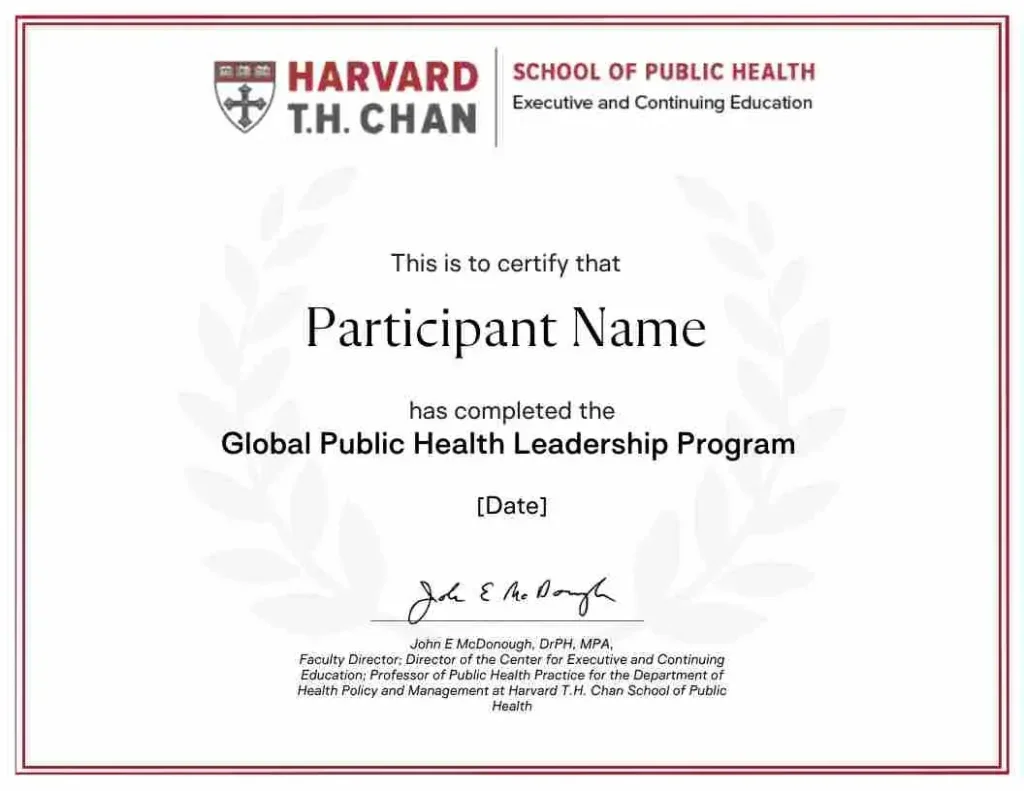
AI in Healthcare Courses, Specialization & NBEMS
Many doctors, nurses, and healthcare managers are now actively looking for structured learning in this area. Here are the most credible options.
AI in Healthcare Specialization — Stanford Online
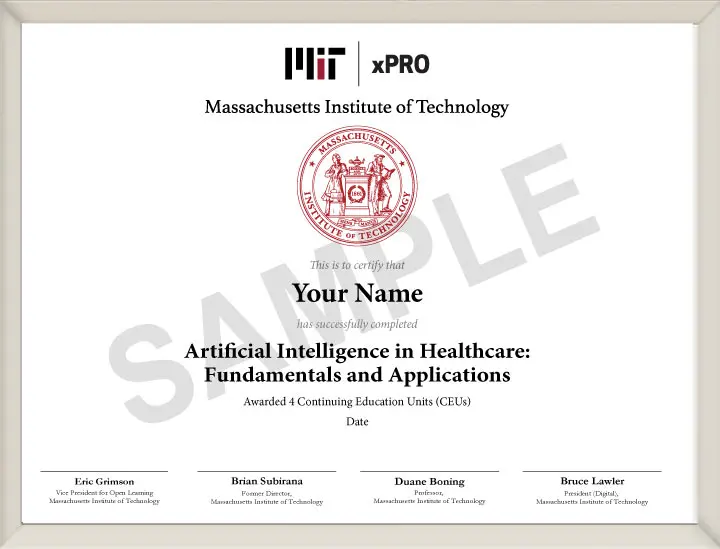
Stanford Online offers an Artificial Intelligence in Healthcare specialization covering the current and future applications of AI in healthcare, with the goal of learning to bring AI technologies into the clinic safely and ethically. It covers the healthcare system, clinical data, machine learning, and AI applications — and is designed for both healthcare providers and computer science professionals.
You can learn at your own pace through a monthly subscription model on Coursera.
AI in Healthcare Leadership — Stanford Medicine (In-Person)
Stanford Medicine offers an intensive four-week hybrid program — AI in Healthcare Leadership and Strategy — designed to equip healthcare professionals with practical tools to responsibly implement and scale AI in clinical and organizational settings. It blends online learning with a two-day in-person immersion at Stanford University. Participants earn a Certificate of Completion from Stanford Medicine.
AI in Healthcare and NBEMS (India)
Searches for “AI in healthcare NBEMS” reflect interest from Indian medical professionals. The National Board of Examinations in Medical Sciences (NBEMS) in India has been incorporating AI-related content into postgraduate medical curricula, particularly in radiology and pathology — where AI tools are already in clinical deployment. Candidates preparing for DNB exams should review NBEMS notifications directly at for the most current syllabus guidance.
Other Recognized Courses and Articles
- Coursera / deeplearning.ai — AI for Medicine specialization (3-course series)
- edX — MIT and Johns Hopkins offer healthcare AI modules
- NEJM Knowledge+ — Articles and case-based learning on AI in clinical practice
- JAMA Network — Peer-reviewed AI in healthcare articles freely available for CME credit
AI in Healthcare News: What’s Happening Right Now (2025–2026)
A landmark State of Clinical AI report released in January 2026 by the ARISE network — led by researchers from Stanford and Harvard — synthesized the most influential clinical AI studies of 2025 to help clinicians, health system leaders, and policymakers distinguish real-world progress from technological momentum.
Other major recent developments:
- The WHO has warned that without clear legal guardrails and investment in AI literacy, there is a real risk of deepening healthcare inequities, and has called on countries to develop AI strategies aligned with public health goals.
- Tools from companies like OpenEvidence and ChatMD have enabled care organizations to access clinical guidelines and peer-reviewed literature in real time during patient care.
- AI decision-making tools are becoming mainstream in 2025, giving doctors immediate access to evidence-based research and treatment guidelines and minimizing diagnostic errors.
AI in Healthcare PPT / Images: What to Know
Searches for “AI in healthcare ppt” and “AI in healthcare images” typically come from students, researchers, and presenters building educational content.
For presentations and slides, the most authoritative public sources are:
- WHO — publishes open-access AI in health infographics and policy slides
- Stanford HAI — releases annual AI Index reports with downloadable data and visuals
- NEJM AI — publishes visual abstracts and summary graphics for clinical studies
- McKinsey Global Institute — healthcare AI reports with charts and diagrams
For images, medical AI platforms like Enlitic, Aidoc, and Google Health have published open imaging examples. Academic journals like Radiology and The Lancet regularly publish AI-generated diagnostic image comparisons in their open-access articles.
FAQs
Q: What are the best AI in healthcare courses available online?
The top options are Stanford Online’s AI in Healthcare Specialization (via Coursera), deeplearning.ai’s AI for Medicine (3-part series), and edX courses from MIT and Johns Hopkins. Stanford also offers an in-person leadership program for working clinicians.
Q: What is the best AI in healthcare specialization for a doctor?
Stanford’s AI in Healthcare Specialization on Coursera is the most recognized, as it’s built for both healthcare providers and technical professionals. It covers clinical data, machine learning, and safe AI implementation.
Q: Is AI in healthcare covered in NBEMS / DNB syllabus?
AI topics are increasingly appearing in Indian postgraduate medical curricula — especially in radiology, pathology, and clinical informatics. Check the current NBEMS notifications at natboard.edu.in for updated syllabus documents.
Q: Where can I find credible AI in healthcare articles and research papers?
The best sources are NEJM AI, JAMA, The Lancet Digital Health, Nature Medicine, and Nature Communications. PubMed and Google Scholar are the best search tools. The Stanford HAI annual AI Index report is also freely downloadable.
Q: What does Stanford say about AI in healthcare?
Stanford’s latest research (2026) shows AI works best at scale-based tasks — like analyzing thousands of records or detecting early warning signals in wearable data. However, it underperforms experienced physicians in situations requiring reasoning under uncertainty or dynamic decision-making during live clinical work.
Q: What has Harvard found in its AI in healthcare research?
Harvard’s most notable recent contribution is the PopEVE system — an AI model that diagnosed about one-third of previously undiagnosed rare disease patients in a study of 30,000 cases. Harvard’s Kohane lab also leads NEJM’s AI initiative and has published extensively on AI’s potential to transform the doctor-patient relationship.
Q: What is the latest AI in healthcare news?
The most significant developments of 2025–2026 include the Stanford-Harvard State of Clinical AI report, the WHO calling for legal safeguards around AI in health systems, ambient AI scribes being deployed in hundreds of hospitals, and Harvard’s PopEVE achieving a new benchmark in rare genetic disease diagnosis.