

Brief Introduction: Claude Opus 4.7 is Anthropic’s most capable generally available model, released on April 16, 2026. It builds on Opus 4.6 with notable gains in complex software engineering, long-horizon agentic workflows, high-resolution vision, and precise instruction following. Available across Claude.ai, the API, Amazon Bedrock, Google Vertex AI, Microsoft Foundry, and GitHub Copilot, it targets demanding professional use cases where reliability and autonomy matter most.

What is Claude Opus 4.7?
Claude Opus 4.7 (API ID: claude-opus-4-7) is Anthropic’s hybrid reasoning model designed for frontier-level performance in coding, agentic work, knowledge tasks, and vision. It supports a 1M token context window and up to 128k output tokens, with adaptive thinking that helps it break down and verify complex, multi-step problems.
Key official improvements include:
- Stronger performance on the hardest software engineering tasks.
- Better autonomy on long-running agentic workflows.
- Significantly enhanced vision capabilities (higher resolution image understanding).
- More consistent instruction following and self-verification of outputs.
- Improved tastefulness and creativity for professional documents, interfaces, and slides.
It is positioned as the top generally available Opus model, though Anthropic notes it is “less broadly capable” than their internal preview models like Mythos.
Features and Capabilities of Opus 4.7
Claude Opus 4.7 excels in areas where previous models needed heavy supervision:
- Advanced Software Engineering — 10–15% lift in task success on difficult benchmarks. It handles rigorous planning, execution, and verification better, making it suitable for handing off complex coding work.
- Agentic and Long-Horizon Tasks — Improved multi-step reasoning with adaptive thinking. It breaks problems into subtasks, validates progress, and maintains consistency over extended interactions.
- Vision Improvements — Processes images at much higher resolution, leading to better analysis of visuals, diagrams, interfaces, and documents.
- Professional Knowledge Work — Produces higher-quality outputs for slides, reports, and creative professional tasks.
Benchmarks and Performance
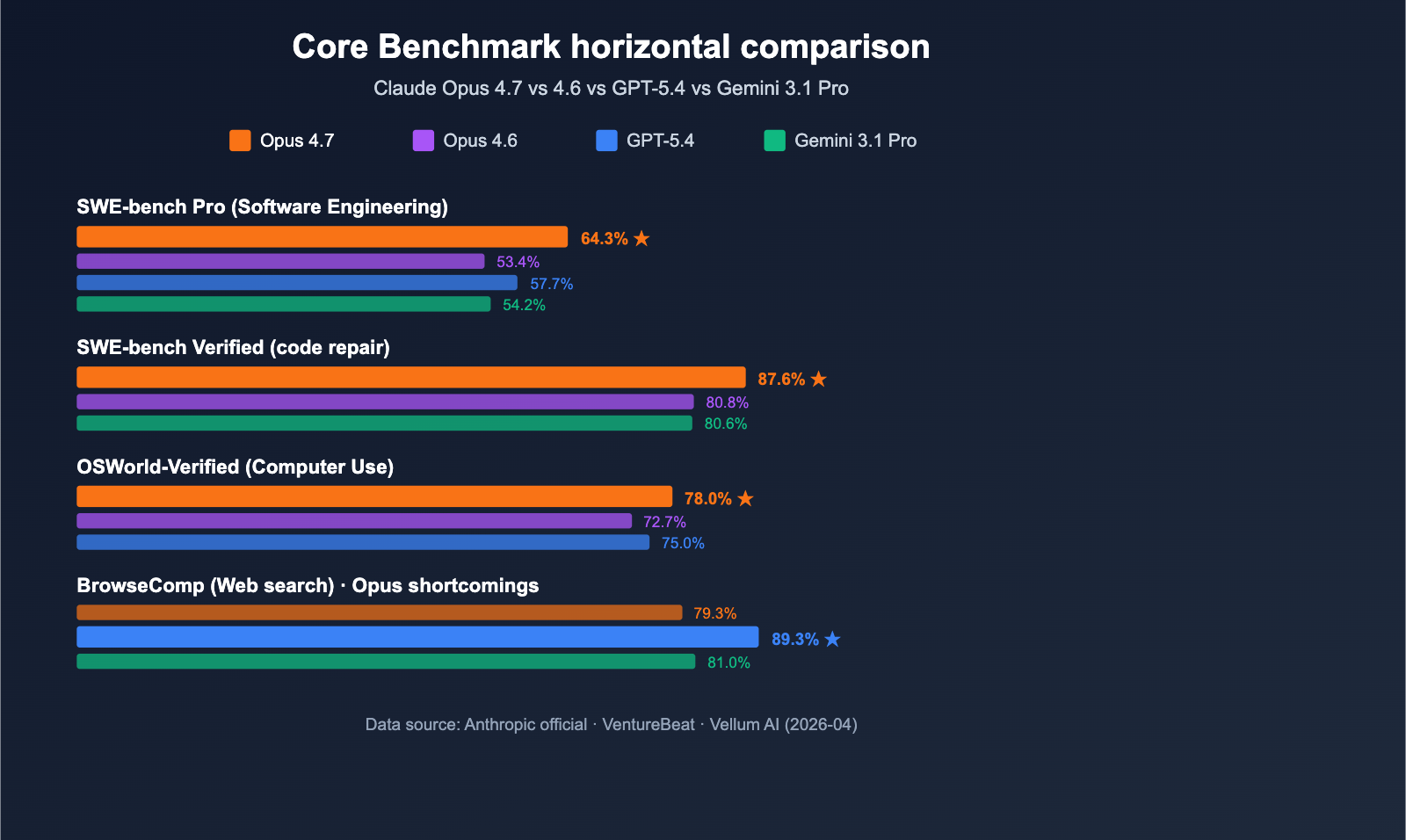
Anthropic and independent evaluations highlight strong results:
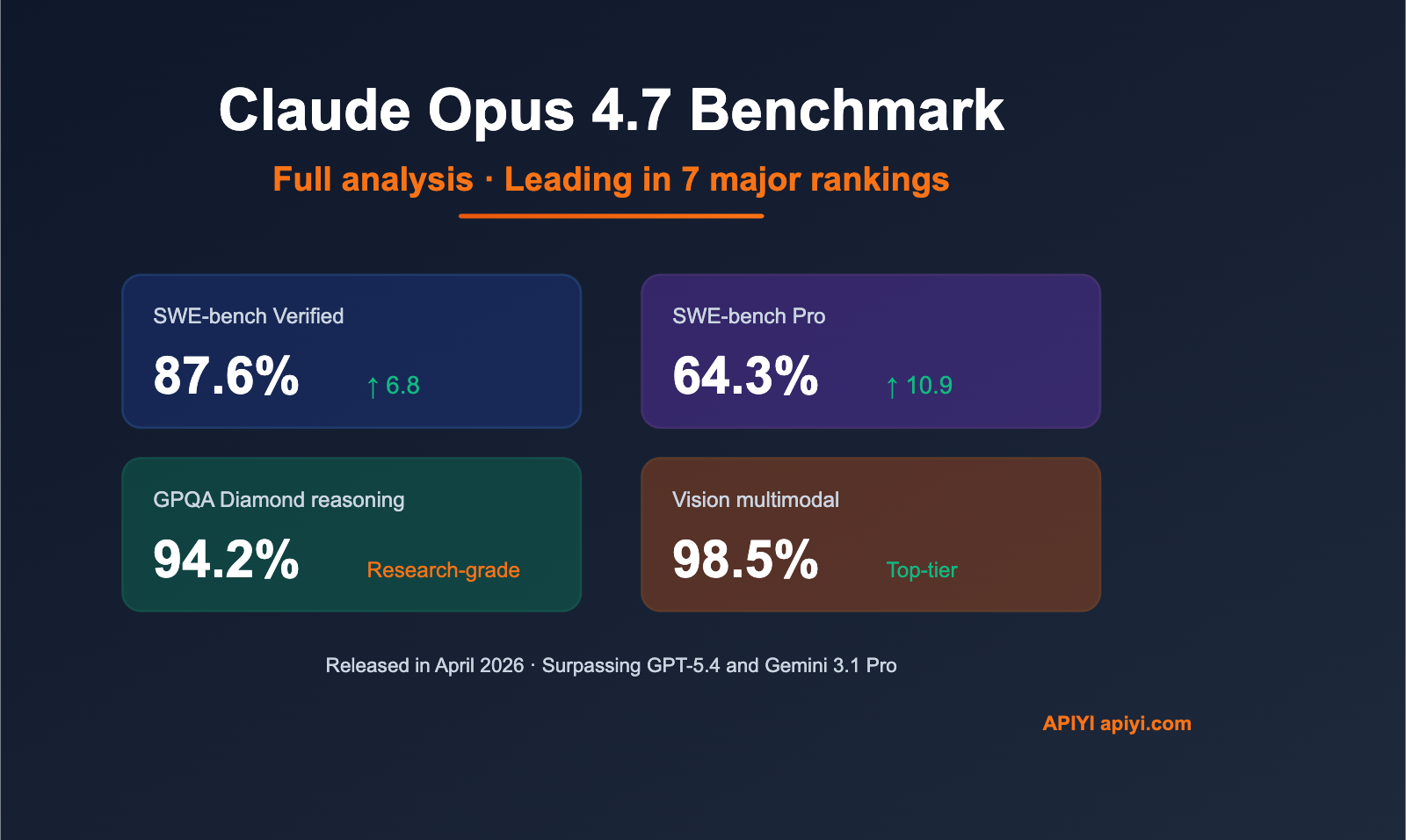
- SWE-bench Verified: 87.6% (significant improvement).
- SWE-bench Pro: 64.3%.
- Leading scores on agentic coding and knowledge work leaderboards, often tying or surpassing GPT-5.4 and Gemini 3.1 Pro in specific areas like GDPval-AA for real-world agentic performance.
However, some long-context retrieval metrics show trade-offs compared to Opus 4.6, and certain internal benchmarks reflect a focus on reliability over raw breadth.
How to Access and Use Claude Opus 4.7
You can use Opus 4.7 in several ways:
- On Claude.ai (default or selectable in the model picker for Pro users).
- Via the Claude API with model name claude-opus-4-7.
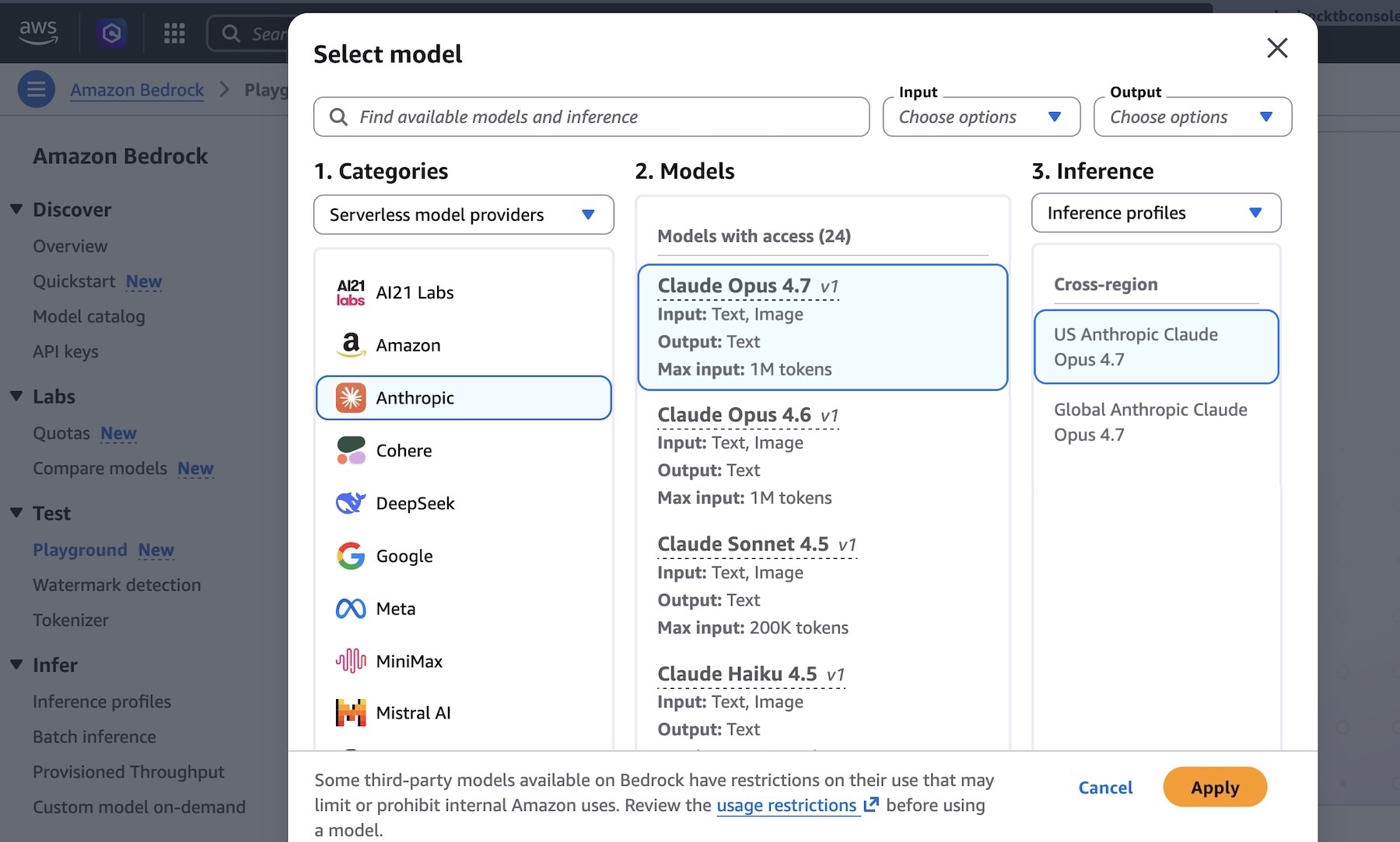
- Through cloud platforms: Amazon Bedrock, Google Vertex AI, Microsoft Foundry.
- Integrated in tools like GitHub Copilot (rolling out to Pro+, Business, and Enterprise users).
Pricing remains the same as Opus 4.6: $5 per million input tokens and $25 per million output tokens. Note that the updated tokenizer can increase effective token usage (up to ~35% more on some content), and some API parameters (like temperature, top_p, budget_tokens) have changed or been removed—check the migration guide for updates.
Opus 4.7 Review
Opus 4.7 reviews are mixed. Official announcements and some developers praise the gains in coding autonomy, vision, and reliability for hard tasks—many report being able to trust it with less supervision on complex projects.
On the other hand, a significant portion of users on forums like Reddit report regressions in everyday use on claude.ai, including poorer instruction following, increased verbosity, sycophancy, laziness on long chats, and hallucinations. Some feel it performs better in dedicated coding environments (like Claude Code or Cursor) than in general chat. Concerns about higher real-world costs and deliberate trade-offs for safety or compute efficiency are common.
Overall, it appears strongest for professional coding and agentic workflows but may not feel like a universal upgrade for casual or creative conversations.
FAQs
What is Claude Opus 4.7?
It is Anthropic’s latest flagship generally available model, released April 16, 2026, focused on advanced coding, agentic tasks, and improved vision.
How does Opus 4.7 compare to Opus 4.6?
It shows gains in software engineering, long-running tasks, and vision, but some users report regressions in general chat and long-context retrieval. Results vary by use case and interface.
Is Opus 4.7 better than GPT-5.4 or Gemini?
It leads in several agentic and coding benchmarks, often tying or surpassing them in real-world knowledge work, though comparisons depend on the specific task.
What is the pricing for Claude Opus 4.7?
$5 per million input tokens and $25 per million output tokens (same as 4.6), though the new tokenizer may raise effective costs slightly.
Where can I use Opus 4.7?
On Claude.ai, the Claude API, Amazon Bedrock, Google Vertex AI, Microsoft Foundry, GitHub Copilot, and integrated developer tools.
Does Opus 4.7 have improved vision?
Yes — it handles significantly higher-resolution images, improving analysis of visuals, diagrams, and documents.